The Connection That Looks Fine on Paper: Rhodes to Symi and Back
The plan was neat. A flight into Rhodes landing at 14:20, a ferry to Symi at 17:00, two nights on the island, and the same boat back on the third morning in time for an evening flight home. The flight landed forty minutes late, the bags took thirty-five minutes, the taxi to the port took twenty-five in traffic, and the group reached the ferry office at 16:20 to find the queue out of the door and the boat already boarding. They made it. The next four people in the queue behind them, on the same flight, did not.
Rhodes to Symi looks like an easy connection on a timetable. In practice it is a connection between an airport, a city, a port and a boat, each of which has its own delays, and the two hours and forty minutes on paper is a much thinner margin than it appears.
What the timetable does not tell you
The published crossing time from Rhodes to Symi is between one and two hours depending on the boat, which is the honest part. What is not on the timetable is that the fast boats leave from a different quay from the conventional ones, that the ticket office closes thirty minutes before departure, and that check-in for a foot passenger is a person with a clipboard rather than a gate.
It also does not tell you that the popular sailings are sold out in August, that the queue at the ticket office is the bottleneck rather than the boat, and that the boat will leave at its scheduled time whether or not the airport had a bad morning.
The airport to port leg, measured
The airport is about fourteen kilometres from the commercial port, on the west side of the city. A taxi takes twenty to thirty-five minutes depending on traffic and costs around twenty-five euros. The bus takes forty-five minutes, costs a fraction, and runs to a schedule that has gaps in the afternoon. Neither is reliable enough to be the last link in a two-hour chain.
The taxi rank at the airport in summer has a queue, and the port has one road in. The combination means the leg should be budgeted at an hour from landing to standing at the ticket office, and that is with hand luggage and no delay on the flight.
Building a margin that survives a bad day
The rule that works is three hours between landing and sailing in summer and two hours in the shoulder season. That sounds excessive until the first time a flight is ninety minutes late and the bags take forty, at which point it is exactly right. The cost of the margin is a morning in Rhodes, which is not a hardship.
An alternative is to fly the day before and stay a night near the port. Rhodes has plenty of rooms and the price in September is reasonable, and the evening in the old town is better than the airport lounge. Anyone travelling in a group of four or more should price this against the risk of losing the boat.
Buying the ticket, and where
Buy the ferry ticket online before travelling if the operator allows it, because the online queue is not the harbour queue. Collect it from the agency on the day or use the electronic version. The ticket office at the commercial port is small, staffed by two people in high season, and full of people who have just discovered the same thing.
If the ticket must be collected, do it on arrival in Rhodes and not on the morning of the sailing. An evening collection the day before takes three minutes. A morning collection on a day when two boats sail takes forty.
The return leg is the harder one
The return has the same structure and a worse failure mode, because the thing at the other end is a flight. A missed ferry from Symi on the last morning means a night in Rhodes and a rebooked flight, which in August is expensive. The morning boat from Symi leaves early and the crossing is short, but the boat can be cancelled by wind and then there is no alternative until the next day.
Anyone with a flight on the same day as the ferry should build in a full day rather than an afternoon. The pattern that works is to take the morning boat and stay the last night in Rhodes, which converts a risky connection into an ordinary transfer.
The wind and the small boats
The Rhodes to Symi route is served by small fast boats as well as the conventional ferry, and the small ones are the first to be cancelled when the north wind picks up. This happens most often in July and August and again in late September, and it is not predictable more than two days out.
Anyone on a tight schedule should book the conventional ferry where it exists, and should check the forecast the day before. The fast boat is thirty minutes quicker and considerably more fragile, and on a connection this tight the fragile option is the wrong one.
What the port is actually like
The commercial port at Rhodes is not the pretty Mandraki harbour with the windmills. It is a working quay a kilometre east of the old town, with a ticket office, a café, a lot of vehicles and no shade. It is a place to arrive, board and leave rather than a place to wait comfortably for two hours.
There are left luggage facilities near the old town and a couple of cafés by the port gate. Anyone with time to fill should walk into the old town rather than sit at the port, which is a fifteen-minute walk and a much better use of the margin.
What the ticket office queue is actually for
On many Greek routes a foot passenger still has to exchange an online booking for a printed boarding pass at a port agency, and that agency is a small office with two windows. In the hour before a sailing the queue is twenty deep and it does not move quickly, because half the people in it are changing dates rather than collecting.
The fix is to collect the day before, or to choose an operator that issues a scannable ticket. If neither is possible, arrive ninety minutes early and treat the queue as part of the crossing rather than as an obstacle to it.
Staying the last night near the boat
On a trip that ends with a morning ferry and an afternoon flight, the cheapest insurance is a room near the departure port for the final night. In Rhodes that means the commercial port rather than the old town, in Piraeus it means the gate end of the city, and in both cases the room costs less than a missed flight.
It also removes the 05:30 taxi, the panic about the alarm, and the argument about whose fault the timing was. The last night of a holiday is not the night to be clever about logistics.
The version of this trip that works
Land in Rhodes the day before, stay a night in the old town, take the morning boat to Symi with the ticket already in hand, stay two or three nights, take the morning boat back, and fly out the following day. That itinerary costs one extra night in Rhodes in each direction and removes every tight link from the chain.
It is not as clean on paper as the version with two hours and forty minutes between landing and sailing. It is, however, the version that survives a late flight, a slow bag and a busy ticket office, and the cost of the two extra nights in Rhodes is less than the cost of one missed boat in August.
Photograph: Wikimedia Commons (CC BY-SA 4.0) · source file

Confessor Santos
Writes about island guesthouses, ferry timetables and the week a room price finally drops.
Keep reading
Nearby landings
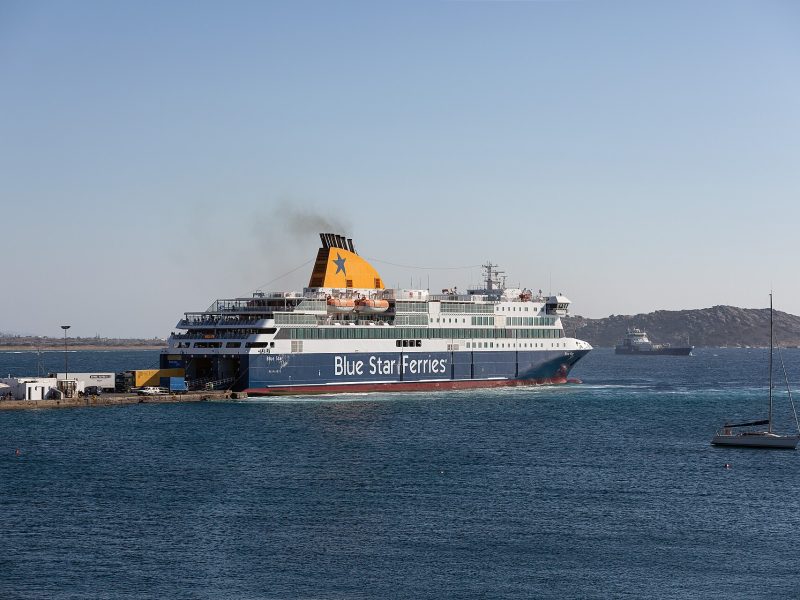
Island Hopping With a Suitcase: Which Ferry Routes Are Kind to Luggage
A couple did four islands in eleven days with two hard-shell suitcases and a cabin bag each, and…
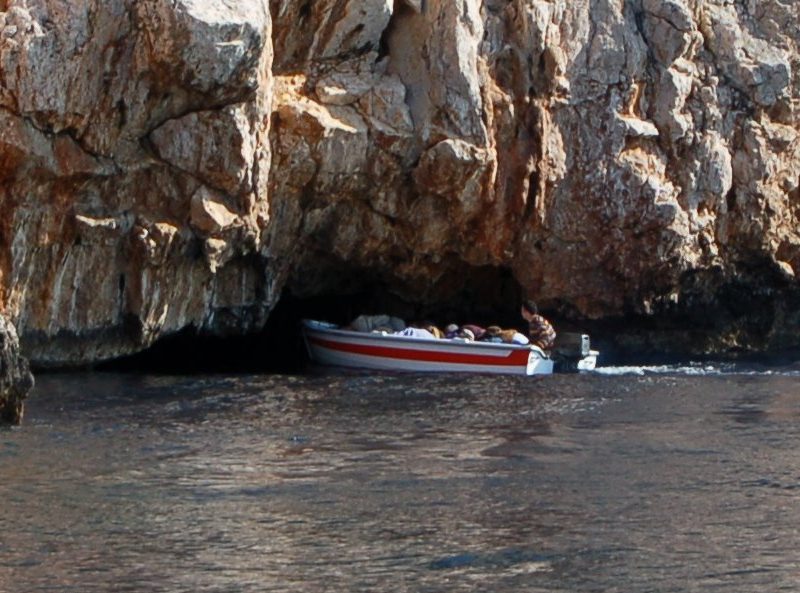
Water Taxis on Kastellorizo: When They Beat the Scheduled Boat
The scheduled excursion boat to the Blue Cave leaves at ten and takes about forty people. The water…
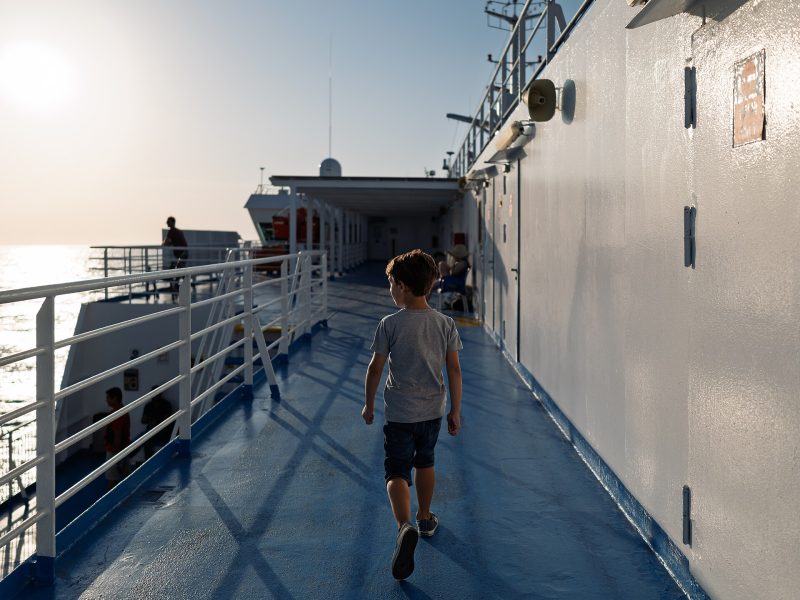
Booking Greek Island Ferries in Shoulder Season: The Timing That Matters
In the second week of September a couple tried to book a ferry from Naxos to Amorgos four…