What a Cancelled Ferry Costs: Rerouting a Three-Island Trip in a Day
At half past six in the morning the text arrived: the sailing to the third island was cancelled, the wind was force seven from the north, and the next boat was in two days. Four people were booked into two nights of accommodation on an island they could no longer reach, a return ferry they could no longer use, and a flight home from a third port. By nine in the evening they had a new plan, two refunds, one rebooking and a dinner in a town they had not intended to visit.
The recovery cost about 140 euros across four people and one day of the trip. It could have cost three times that, and the difference was entirely in the order the decisions were made. Cancellations are a normal part of island travel and the response to one is a procedure rather than a crisis.
The first hour: do not move
The instinct is to run to the ticket office. That is the wrong first move, because the queue there is forty people long and the information is the same as the information on the phone. The first hour is better spent establishing what is actually cancelled, what is still running and what the alternatives are.
Check three sources: the operator’s website, the port police notice board, and a phone call to the local agency. The website is fastest, the board is authoritative, and the agency knows what the locals know. Do not use an aggregator, which updates last and shows sailings that no longer exist.
The second hour: decide what the trip is for
With the facts in hand, the question is not how to reach the planned island but which of the remaining purposes matters most. Is it the specific island, the beach, or the flight home. Most trips have one fixed point, usually the flight, and everything else can be rearranged around it.
Once the fixed point is named, the rest becomes arithmetic. From that port, which boats leave in the next thirty-six hours, and which of those places would make a good two nights. The replacement does not have to be the same kind of island. It only has to be reachable and open.
The money: what is refundable and what is not
A cancellation by the operator is refundable or rebookable at no charge, and the refund is processed by the operator rather than the agency. That part is straightforward and usually automatic once the cancellation is official. Collect the cancellation notice in writing or as a screenshot, because a hotel or a booking platform will ask for it.
Accommodation is the harder half. A room booked for the night after a cancelled ferry is a no-show rather than a weather event, and many small properties will charge the first night. The ones that do not are the ones that have been asked in advance, which is the argument for a short written message at the booking stage.
The accommodation conversation
Call the room, do not email, and call as soon as the cancellation is confirmed. Explain, ask whether the first night can be moved rather than cancelled, and offer to rebook for later in the season if the property is small. Most family-run places will move a booking rather than take a fee, especially if the call comes before the check-in time rather than after.
If the answer is no, pay the night and move on. Disputing forty euros from a quay with no signal while the alternative boat boards in twenty minutes is a poor use of the only resource that matters, which is time.
The replacement island and the two-hour rule
When choosing a replacement, apply a two-hour rule: any boat that leaves within the next two hours is a better bet than a better island tomorrow, because the wind may cancel that one too. Take the first crossing to somewhere with rooms, and improve the plan from there.
Somewhere with rooms is the operative phrase. In August, arriving unbooked on a popular island is a gamble. In September it is usually fine. The safe pattern is to phone two properties from the port before boarding and hold a room for the night.
What the reroute costs in practice
On this trip the costs were a lost ferry fare of 46 euros refunded, a lost first night of accommodation at 55 not refunded, a replacement ferry at 32, and an extra night in the transfer town at 60. The total new money was 92, minus the refund, so about 46 euros net plus one day. The flight was unaffected because it left from the port they were already in.
That is the normal shape of a cancellation: one night’s accommodation, one replacement fare and a day. It is not a catastrophe and it is not free. Budgeting a hundred euros of contingency for a multi-island trip is not pessimism, it is arithmetic.
The flight is the thing to protect
Almost every expensive cancellation story ends with a missed flight. The protection is to be back at the departure port a full day before the flight, not the same morning. A night in the port town costs less than a rebooked ticket and removes the only irreversible risk in the trip.
That single rule covers most of the exposure. Islands can be rearranged, rooms can be lost, boats can be rebooked. A flight that leaves without you cannot be fixed for the price of a hotel room.
What the operator will actually do
Operator practice is more helpful than the websites suggest. When a sailing is officially cancelled, the ticket is refunded or transferred to the next available sailing, and on the smaller routes the port agent will often telephone round the rooms and the taxis to help. What the operator will not do is pay for a missed flight or a lost night, because that is not what the ticket covers.
Ask the port agent rather than the call centre. The agent lives on the island, knows the alternatives and will tell you which of them has space, and the conversation takes two minutes face to face.
The next day is the sorting day
Cancellations rarely leave you with a free day at the beach. The following morning goes on the refund, the message to the hotel that was expecting you, and the booking of the next crossing, and it is worth doing all three before breakfast rather than at four in the afternoon when offices close and the queue reforms.
That is also the moment to decide whether to abandon the third island entirely and take a longer stay where you are. Half the reroutes described in this article were better than the original plan, and the ones that were better were the ones decided quickly rather than defended stubbornly.
What to keep and what to note
Keep the cancellation notice, the receipts for the replacement travel, and a note of the times. Some travel insurance policies do cover ferry cancellations caused by weather when the knock-on cost is accommodation, and the claim needs evidence rather than a story. Photograph the notice board with the date visible.
None of this makes a cancelled ferry pleasant. It does make it a day rather than a disaster, and the difference between those two outcomes is a sequence of decisions taken calmly in the first two hours, before anyone has queued at a ticket office for something they could have found out by phone.
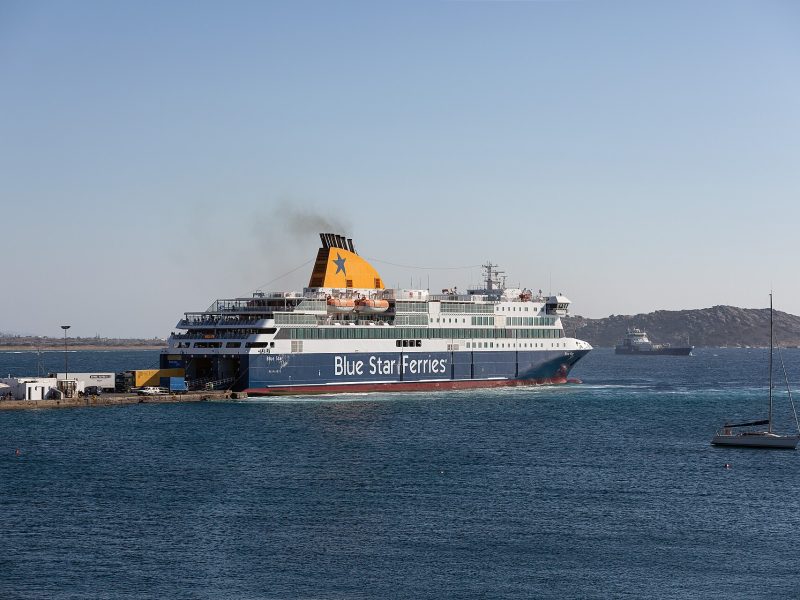
Photograph: Wikimedia Commons (CC0) · source file

Confessor Santos
Writes about island guesthouses, ferry timetables and the week a room price finally drops.
Keep reading
Nearby landings
Island Hopping With a Suitcase: Which Ferry Routes Are Kind to Luggage
A couple did four islands in eleven days with two hard-shell suitcases and a cabin bag each, and…
Water Taxis on Kastellorizo: When They Beat the Scheduled Boat
The scheduled excursion boat to the Blue Cave leaves at ten and takes about forty people. The water…
Booking Greek Island Ferries in Shoulder Season: The Timing That Matters
In the second week of September a couple tried to book a ferry from Naxos to Amorgos four…