A Winter Week on Symi: Heating, Ferries and the Closed Tavernas
In the second week of January the harbour at Gialos has four boats in it, two of which are fishing. The tavernas along the front are shuttered, the water taxis are hauled out, and the only place serving food is a small kitchen up in Chorio that opens at seven in the evening and does not have a menu. The room cost 35 euros a night and the heating was a reversible air conditioner that took two hours to make a difference.
Symi in winter is not a resort with the volume turned down. It is a working island of two and a half thousand people with a sponge-diving history and a ferry that comes three times a week. The week is quiet, cheap and genuinely interesting, and it requires a different set of expectations from any other trip to the same island.
Getting there in January
The winter ferry from Rhodes runs a few times a week and the crossing takes about an hour on the conventional boat. The fast boats stop for the season. Flights to Rhodes are frequent and cheap in January, and the connection to the boat is the only part of the journey that needs planning.
The risk is that the boat is cancelled for wind, which happens more in winter than in summer, and the next one may be two days away. Anyone travelling in January should have a night in Rhodes at each end and a flexible ticket, because the alternative is a night in the port.
Heating is the whole game
Symi’s houses were built for heat. Stone walls, small windows, high ceilings and no insulation. In January that means a room at twelve degrees in the morning unless something is running, and the something is usually an air conditioner in reverse or a portable oil radiator.
Ask three questions before booking: what is the heating, is electricity included, and is the room on an outside wall. A room with two external walls is noticeably colder than one with one, and the difference is not visible in the photographs. A wood stove is the best answer and needs someone to show you how to use it.
What is open, and the taverna that matters
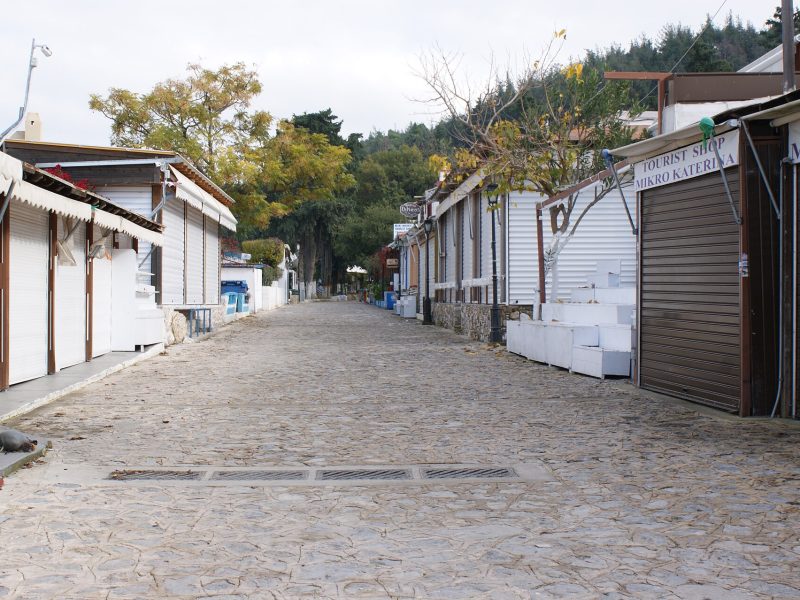
In Gialos almost everything is shut. In Chorio, the old town above, two or three places operate through the winter for residents, and one of them becomes the centre of the island’s evening. The bakery in Chorio opens in the morning. A grocery near the harbour keeps reduced hours and stocks what the village eats.
The pattern to follow is to eat where the residents eat, which in January means climbing the Kali Strata in the evening and walking down afterwards with a torch. The food is better than the summer menu and the prices are lower, and the room is warm because it is full of people.
The Kali Strata in winter
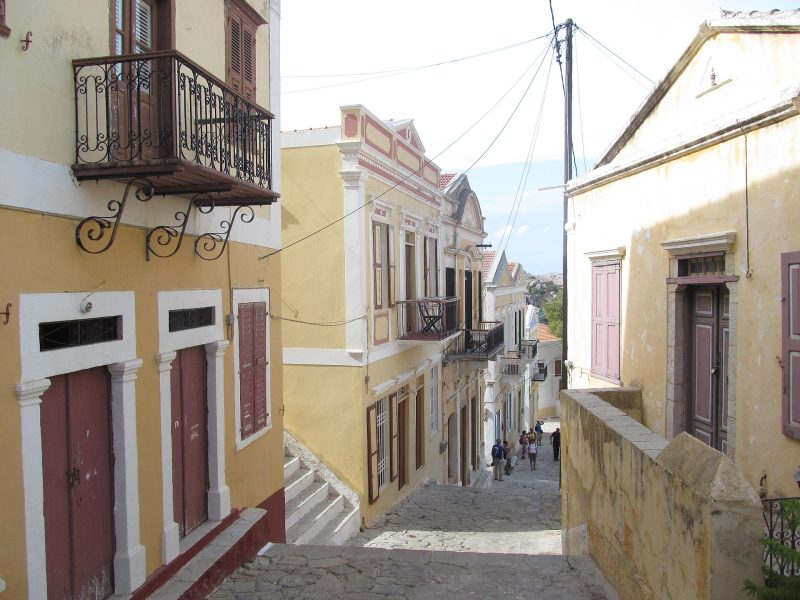
The five hundred steps between the harbour and Chorio are the island’s main street in summer and its only street in winter, because the bus runs twice a day at best. Walking up takes twenty-five minutes and is the exercise of the day. Walking down after dinner requires a torch, because the lighting is intermittent.
In rain the steps are slippery and the handrail is not continuous. Anyone with a knee problem or a fear of falling should book a room in Chorio rather than at the harbour, which reverses the summer advice entirely and is the single most important booking decision for a winter week.
The walks, which are the reason to come
The old paths to Pedi, to the monastery at Panormitis and across to the west coast are clear and cool in January, and the island is green. A walk that is punishing in June is a pleasure at fifteen degrees, and the terraces and the chapels are visible in a way that the summer heat obscures.
The path to Panormitis is a full day and should not be attempted alone in winter, because there is no one on it and the phone signal is patchy. The walk down to Pedi takes forty minutes and there is a taverna at the bottom that opens at weekends in winter.
The sea, the wind and what not to expect
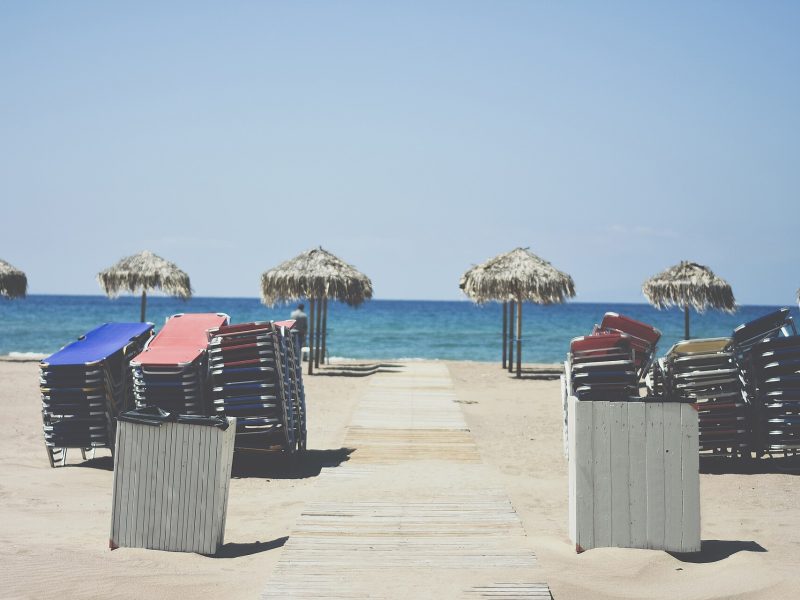
Swimming in January is for the committed. The water is around sixteen degrees and the beaches are empty, the sunbeds are stacked, and the coves are reached by walking rather than by boat. A short swim is possible on a calm sunny day and is memorable in the way that cold water is memorable.
The wind is the dominant weather. The north wind in winter is stronger and longer than the summer meltemi, and it stops the ferries and makes the harbour uncomfortable. A week in January will usually contain one or two days when nothing outdoors is appealing, and the plan needs a book.
What a week costs
Accommodation at 35 to 45 euros a night for a room that is 120 in August. Food at ten to twenty euros a head for a proper dinner. Flights to Rhodes at a fraction of the summer price. A week for two, including travel from northern Europe, can come in under 700 euros, which is less than four nights in August.
The saving is real and it is the reason some people go every winter. What it buys is not a beach holiday but a week in a place that is living its ordinary life, and the two are not comparable purchases.
The social side, which is unexpected
In January a visitor is a novelty and the island engages with them. The person in the grocery will ask where you are staying. The taverna owner will sit down. The man repairing a boat will explain what he is doing. This does not happen in August, when there are four thousand visitors and everyone is busy.
For a solo traveller this is the strongest argument for a winter week. The island is small enough that by the fourth day you are recognised, and the recognition is friendly rather than commercial. It is a different kind of travel and it is available only when the season is closed.
A wet day in Chorio
When the rain comes in January it comes sideways and the harbour disappears, and the answer is to be indoors in the old town. The churches are the substantial buildings and several are open in the morning, painted inside and warm in the way that stone is warm when people are in it. The folklore museum near the top of the village opens on request through the winter.
The other answer is a long lunch. A taverna with four tables and a stove will let you sit for three hours in January, and the owner will join you. That is not a wasted day on a small island in winter. It is the day the trip was for, and it costs about twenty euros for two people.
Booking and the shutdown dates
Confirm that the property is open before paying anything, and confirm again two days before arrival by phone. Some rooms are listed all year and closed from November, and the listing is not always updated. A direct booking with a mobile number is the only reliable method in winter.
Ask about the ferry too, because the owner knows the winter schedule better than any website and will tell you which sailing is most likely to run. That single conversation is worth more than any amount of research, and it is available only in a season when the owner has time to have it.
Photograph: Wikimedia Commons (CC BY-SA 4.0) · source file

Confessor Santos
Writes about island guesthouses, ferry timetables and the week a room price finally drops.
Keep reading
Nearby landings
Booking Late Versus Early: Island Room Rates in the Quiet Weeks
Two friends booked the same room on the same island for the same three nights in late September.…
What Stays Open on a Greek Island in November
In the first week of November a traveller arrived on a Cycladic island with a room booked and…
Why the Last Week of September Beats the First Week of June
The first week of June and the last week of September are four months apart and almost identical…