Cheap Island Stays Without the Compromise: Where the Discounts Are Real
The cheapest room on the island was 32 euros and the review said basic but clean. The second cheapest was 44 and the review said excellent value. The first had no window in the bathroom and a mattress with a hollow in the middle. The second had both, plus a terrace and a kettle. Twelve euros a night separated a bad decision from a good one, and the reviews had said so in language that was easy to read past.
Cheap island accommodation is not a single category. There is a floor below which the saving is a false economy and there is a band above it where eight or ten euros buys a materially better week. Finding that band is the whole skill, and it is mostly a matter of knowing which features are worth paying for.
What the money actually buys
At the bottom of the market, roughly 30 to 40 euros in the shoulder season, the room is a bed, a bathroom and a door. At 45 to 60 it adds a window with a view, a fridge, a kettle, better linen and a room that has been decorated at some point this decade. At 65 to 90 it adds air conditioning, daily cleaning, a terrace and a breakfast.
Each of those steps is worth a specific amount, and the amount is not the same for everyone. Air conditioning is worth nothing in October and everything in July. A terrace is worth a great deal to a couple and nothing to someone who leaves at eight and returns at ten.
The three features worth paying for
A private bathroom, air conditioning in the months that need it, and a window that opens onto something other than a wall. Those three are the difference between a room that works and a room that is endured, and none of them can be fixed after arrival. Everything else is negotiable: a kettle can be borrowed, a fridge can be a cool box, a terrace can be a taverna.
The order of priority changes with the season. In July air conditioning comes first. In October the window comes first, because the room will be warm anyway and a dark room is depressing. A private bathroom is non-negotiable in every month for most travellers, and the shared-bathroom rooms that used to dominate the cheap end have largely disappeared.
Where the false economies are
The room above a bar, the room on the main road, the room with the shared terrace and the single bathroom, the room advertised as a studio that is a bed in a corridor. All of these are cheap for a reason and the reason is not generosity. A week in a room where sleep is difficult costs more in mood than it saves in euros.
The other false economy is distance. A room two kilometres out of the village at 35 euros plus a scooter at 20 a day is more expensive than the room in the village at 60. The arithmetic is obvious and people still get it wrong, because the room rate is the number they compare.
What reviews reliably reveal
Reviews reveal problems better than they reveal quality. A room described as fine for the price by six people and as noisy by two is noisy. A room where three separate reviews mention the water pressure has a water pressure problem. The complaints are the reliable signal, and they repeat because they are structural rather than personal.
Read the three-star reviews first and the one-star reviews last. The one-star reviews are often about a dispute rather than a room, and the three-star reviews are written by people making a fair assessment. Two or three of them mentioning the same thing is enough.
The mid-band, and why it is where the value is
The 45 to 60 euro band is where the best value on a small island sits in the shoulder season. It buys a room that is comfortable without being stylish, in a building that is maintained but not renovated, run by an owner who is present. The failures in this band are small and the price is honest.
Above 90 the money buys view, design and service, which is a different purchase. Below 40 it buys compromise. The band in between is where a week costs 350 euros and feels like it cost more, and that is the definition of value in accommodation.
Half board, breakfast and the arithmetic of eating in
Breakfast included is worth six to ten euros a head, and it changes the morning. A room at 55 with breakfast beats a room at 48 without it, and the difference is not only money. Half board, where offered, is worth it on islands with few restaurants and rarely worth it where the village has ten.
Ask whether breakfast is included rather than available. The difference in listing language is one word and the difference in the bill is fifty euros a week, and the number of people who discover this at checkout is remarkable.
Season timing as the largest single lever
The same room costs double in August and a third more in June. Choosing the last week of September or the first of October delivers the largest saving available without any compromise on the room at all, and it is the one discount that requires no skill beyond a calendar.
The second lever is length. A stay of five nights or more often attracts a discount that a three-night stay does not, particularly in the shoulder season, and asking for it is a two-line message. The third is direct booking, which removes fifteen per cent of commission from the price and gives the owner room to move.
What to ask before paying
Five questions: is the bathroom private, is there air conditioning, is breakfast included, is there a window in the bedroom, and how many steps from the road to the door. The answers take a minute and they determine whether the room is what the photographs suggested. A property that will not answer them is a property to leave alone.
Ask in the first message rather than after the deposit. A good owner answers all five in one paragraph and often volunteers a sixth thing you had not thought of, which is the best sign available that the room is run by someone who cares.
The rooms that are genuinely undervalued
Rooms in the village rather than at the port are often cheaper and better, because they are less convenient and the inconvenience is small on an island four kilometres wide. Rooms on the upper floor of a building with no lift are cheaper for a reason that costs nothing to a traveller with one bag. Rooms without a sea view are cheaper by a margin that is disproportionate to the loss.
Those three categories are where the real discounts are, and they are discounts on position rather than on quality. A room at 45 with a view of a courtyard in a village with a good taverna is better value than a room at 75 on a waterfront where the noise keeps you awake, and the difference is a decision rather than a budget.
The compromise that is never worth it
A room without a window, in any month, at any price. A room where the bed is a sofa bed for an adult couple. A room where the bathroom is across an unlit corridor. These are the things that turn a cheap week into a grim one, and no island is beautiful enough to compensate for them at three in the morning.
Everything else can be traded. Give up the view, give up the terrace, give up the breakfast, walk an extra ten minutes. Those are savings. The three above are not savings, they are a different kind of holiday, and the room rate is not the number that should decide it.
Photograph: Wikimedia Commons (CC BY-SA 3.0) · source file

Confessor Santos
Writes about island guesthouses, ferry timetables and the week a room price finally drops.
Keep reading
Nearby landings
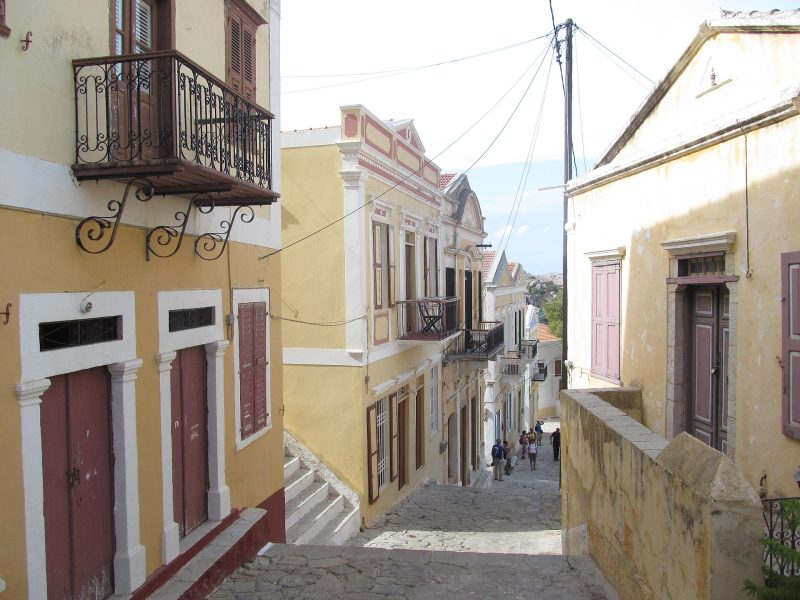
Booking Late Versus Early: Island Room Rates in the Quiet Weeks
Two friends booked the same room on the same island for the same three nights in late September.…
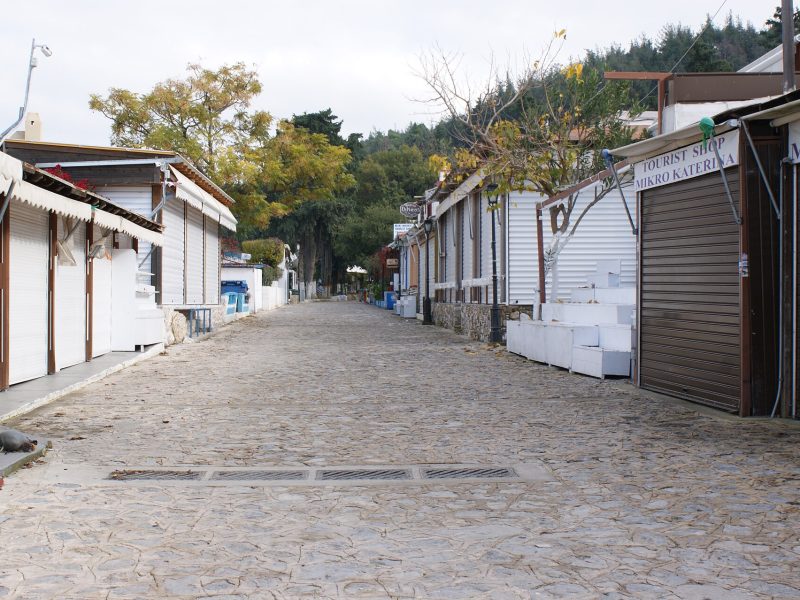
What Stays Open on a Greek Island in November
In the first week of November a traveller arrived on a Cycladic island with a room booked and…

Why the Last Week of September Beats the First Week of June
The first week of June and the last week of September are four months apart and almost identical…