Deck Versus Cabin on an Overnight Island Ferry: A Nine-Hour Comparison
Two travellers left Piraeus on the same nine-hour overnight sailing to the Dodecanese in the last week of September. One had paid 42 euros for an economy deck ticket and slept on a bench under a lifeboat with a jacket over her face. The other had paid 118 for a two-berth inside cabin and slept for six hours in a bed with a door that locked. They arrived at the same time, in the same port, and disagreed about whether the extra 76 euros had been well spent.
The overnight ferry is the cheapest way to cover a long distance in Greece and the most misunderstood. It is neither a cruise nor a bus. It is a working ship with freight on the lower decks, and the difference between a good night and a bad one is almost entirely a matter of which ticket is bought and how the evening is planned.
What an economy deck ticket actually gives you
An economy ticket gives access to the open decks, the indoor lounges, the bars and the self-service restaurant, and a seat that is not reserved. The lounges have aircraft-style seats that recline a little, and the decks have benches and open space where people lay out sleeping bags. There are no showers and no luggage storage beyond what you keep with you.
In September this is survivable and in August it is unpleasant, because the decks fill early and the good benches go by nine in the evening. The people who sleep well on deck are the ones who arrive at the port first, claim a corner behind a windbreak, and treat it as camping at sea rather than as a failed hotel.
What a cabin costs and what it contains
A two-berth inside cabin on the same sailing was 118 euros, which covers two people, so 59 each. It contains two bunks, a small bathroom with a shower, a wardrobe, a mirror, a power socket and a door that locks from inside. No window, no kettle, and a ventilation grille that makes a noise. Bedding is provided and clean.
The outside cabins with a porthole cost about 20 euros more and are worth it for anyone who finds inside cabins airless. The luxury cabins with a sitting area cost double and are not worth it on a nine-hour crossing, because most of the crossing happens in the dark and nobody sits anywhere but the bed.
The sleep arithmetic
The sailing left at nine in the evening and arrived at six in the morning, which is nine hours of which maybe seven are usable for sleep. On deck, that produced about four hours of broken sleep, a stiff neck and a sunrise that made up for some of it. In the cabin, it produced six and a half hours and the ability to arrive and function.
Whether that difference is worth 76 euros depends on what the next day costs. On a holiday, the first day is often the day a car is collected, a ferry is caught or a walk is planned. Losing it to exhaustion is a real cost, and it is the strongest argument for the cabin on the outbound leg.
The shower and the morning
The cabin has a shower, which is the single most underrated feature of the ticket. Arriving at six in the morning after nine hours at sea and being able to wash before walking into the port is worth more than the bed. The deck passenger arrives at the same hour and queues for the port café toilet.
The water is hot and the pressure is adequate. The cubicle is small enough that the floor gets wet, and there is nowhere to put a towel except over the door. None of that matters. What matters is that the first hour on the island is spent drinking coffee rather than looking for a shower.
Food, drink and the evening
The self-service restaurant serves a decent hot meal for around twelve euros and a lot of people eat there because it is the only option. There is a bar with a proper counter and a view, and the deck passengers colonise it until midnight. The cabin passenger can also eat there and then go to bed, which is the better sequence.
Bring water and something to eat for the morning, because the cafeteria opens late and the coffee is not good. A flask and a bag of pastries costs five euros and removes the dependence on a queue that forms the moment the lights come on.
The luggage problem
Economy passengers keep their bags with them, which on a full sailing means sleeping next to a suitcase and being unable to leave it. Cabin passengers leave bags in the cabin and walk around the ship. This is worth a great deal if travelling with more than a cabin bag, and it is worth nothing if the bag is small enough to use as a pillow.
The lockers on the vehicle decks are not available to foot passengers. Anyone on an economy ticket with a large suitcase should expect to sit with it, and should therefore choose a bench at the end of a row rather than a seat in the middle.
Seasickness and the weather
A large conventional ferry is stable and most people are fine. A smaller fast craft on the same route in a swell is not, and the difference is not in the ticket price. If the forecast is poor, the conventional overnight boat is the calmer option and the cabin is the calmer place within it, because a bunk in the middle of the ship moves less than a bench at the stern.
Anyone who knows they are susceptible should take the cabin and lie down early rather than sitting up in a lounge. Tablets taken before boarding work better than tablets taken after the first hour, and the shop on board sells them at a price that reflects the captive market.
When the deck ticket is the right ticket
The deck ticket is right for a short crossing, for a cheap trip where the 76 euros is a night of accommodation elsewhere, and for anyone who genuinely enjoys the deck at night. It is also the only option when the cabins are sold out, which happens in August on the popular routes.
It is wrong for anyone arriving to a first day of driving, for anyone travelling with a large bag, for anyone over sixty on a long crossing, and for the return leg when the trip ends with a flight. Those four cases cover most travellers and explain why the cabins are booked out before the decks are.
Booking the cabin early
Cabins sell out before decks on every route, and on the small islands they sell out weeks ahead in high season. Book the cabin as soon as the date is fixed, and book the return at the same time. If the cabin is unavailable, the next best option is a reserved aircraft seat in a lounge rather than a bench on deck, which costs a few euros and guarantees somewhere to sit.
Anyone who ends up on deck should board early, take a windbreak position, bring a sleeping bag liner and an eye mask, and set an alarm for an hour before arrival. The nine hours pass. The arrival is what the ticket is for, and the difference between the two tickets is whether that arrival is the start of the holiday or the end of a night.
Photograph: Wikimedia Commons (CC BY-SA 4.0) · source file

Confessor Santos
Writes about island guesthouses, ferry timetables and the week a room price finally drops.
Keep reading
Nearby landings
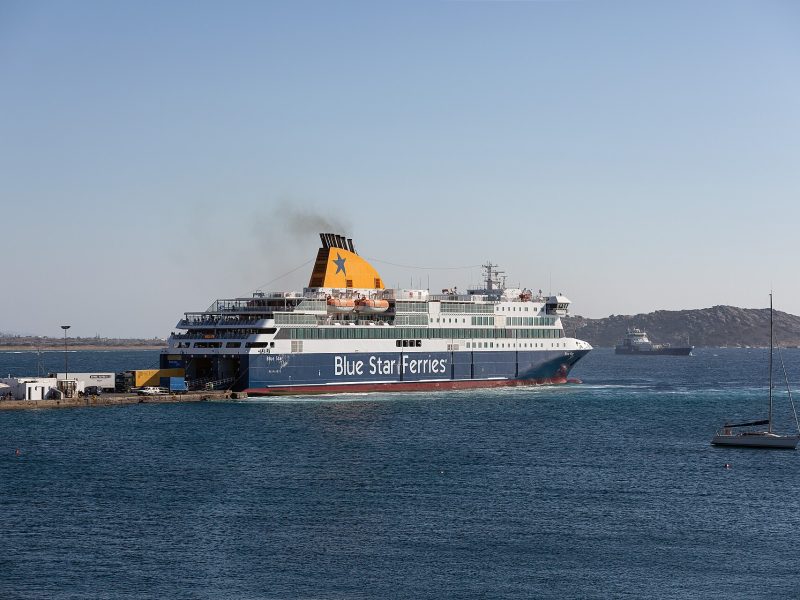
Island Hopping With a Suitcase: Which Ferry Routes Are Kind to Luggage
A couple did four islands in eleven days with two hard-shell suitcases and a cabin bag each, and…
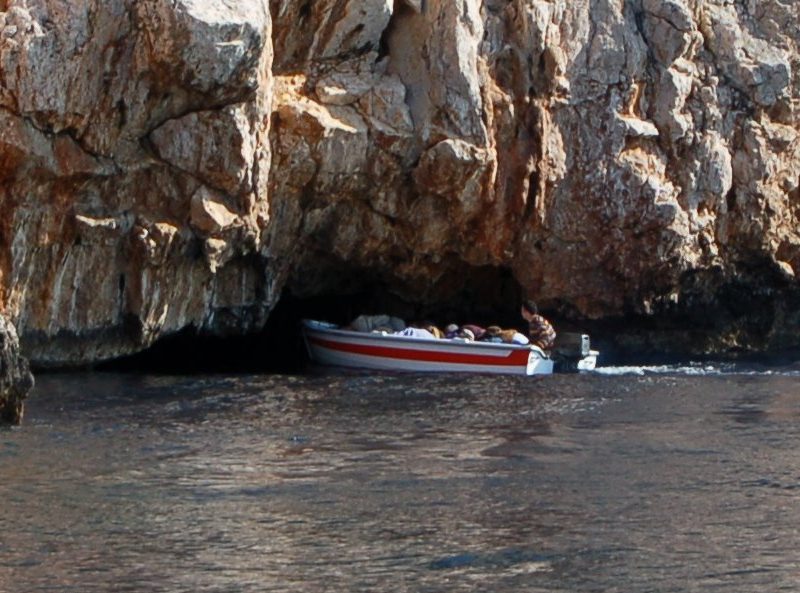
Water Taxis on Kastellorizo: When They Beat the Scheduled Boat
The scheduled excursion boat to the Blue Cave leaves at ten and takes about forty people. The water…
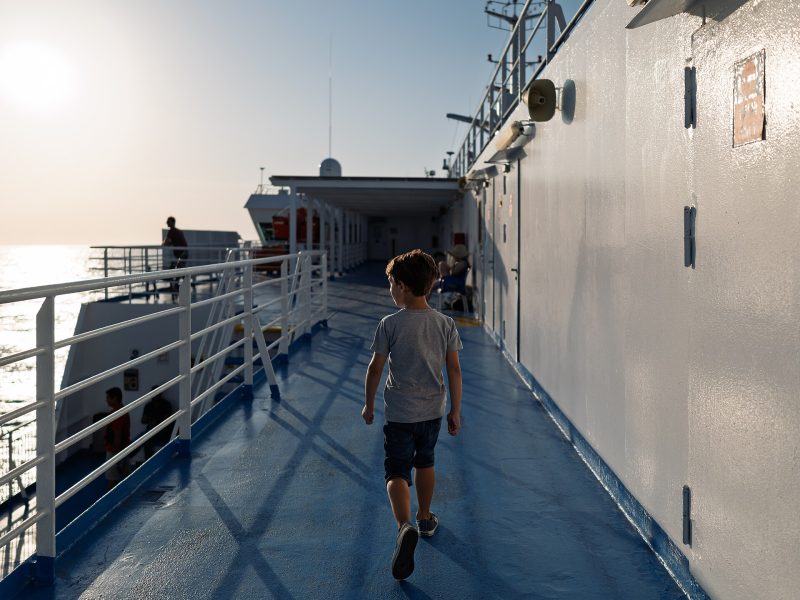
Booking Greek Island Ferries in Shoulder Season: The Timing That Matters
In the second week of September a couple tried to book a ferry from Naxos to Amorgos four…