Pebble Versus Sand: What to Pack for Each
The first beach on the island was pebbles the size of a fist, and the couple had brought two towels, no shoes and a bag with a zip that filled with grit in ten minutes. They lasted forty minutes, walked back to the room, and spent the rest of the week carrying a mat, a pair of rubber shoes and a plastic bag. The beach had not changed. The packing had.
Greek island beaches are either sand, pebble or rock, and the three require different things. The differences are small, cheap to accommodate and completely ruinous to ignore, and they are the sort of detail that separates a comfortable week from a week of adjusting a towel.
What pebble beaches demand
Shoes, first of all. Pebbles of five centimetres and above are painful to cross barefoot and impossible to walk on with a bag in each hand. A pair of cheap rubber shoes or sandals that stay on in water solves the entry, the exit and the walk to the taverna.
Second, something thicker than a towel. A towel on pebbles compresses to nothing and every stone is felt. A foam mat, a thin inflatable or a folded blanket makes the difference between sitting and fidgeting, and it costs very little and weighs almost nothing.
What sand beaches demand
Sand needs less equipment and more planning. A towel is enough to sit on, shoes are unnecessary, and the problem is that sand gets into everything: the bag, the phone, the water bottle, the food. A bag that closes properly is the single best purchase for a sand beach.
Sand also needs shade, because a sand beach with no trees is a reflector. The light comes off the sand and burns the underside of everything, and an umbrella is worth carrying where there is no tamarisk.
The rock platforms and the third category
Many of the best swimming spots on the smaller islands are not beaches at all but flat rock platforms with a ladder or an easy entry. They need shoes, a mat, and something to anchor a bag, and they offer the clearest water and the fewest people.
Rock platforms are also the least forgiving. There is no shade unless there is a cliff, no sand to bury a bag in, and a fall is a real injury rather than a bruise. They are worth seeking out and they require more care than a beach.
The bag that works on all three
A dry bag or a zip-top bag inside a tote solves sand, grit and spray at once. A bag with a single open top is the wrong bag for every Greek beach, and the number of phones lost to sand and water on the islands every summer is entirely a bag problem.
Keep the phone in a sealed bag, the money in a smaller one, and nothing loose. This is the whole system and it costs about fifteen euros, and it lasts for years.
Shoes, and the pair that does everything
One pair of sandals that stay on in water and one pair of closed shoes for the walk in. That covers pebbles, rocks, the path and the taverna. Anything else is a third pair carried for an occasion that does not arise.
The sandals need a heel strap rather than a slide, because a slide comes off in the water and on a pebble slope. The closed shoes need to be light, because they are being carried rather than worn for most of the day.
Water, food and the taverna question
A beach with a taverna changes the packing entirely. Two litres of water and a bag of peaches is a heavy load if there is a bar at the top of the beach, and it is essential if there is not. Check before leaving, because the taverna may be closed on a Tuesday for reasons of its own.
On a beach without facilities, take water and something salty. The combination of sun, salt water and swimming depletes more than people expect, and the headache that arrives at four in the afternoon is usually dehydration rather than sunstroke.
The umbrella and how to fix it in pebbles
An umbrella will not go into pebbles without a base. The screw-in type works in sand and not in stone, and the answer on a pebble beach is either a weighted base, a rock pile, or the shade of a cliff. This is the most common equipment failure on the islands, and it is solved by asking the room owner what the local beach is like.
On a beach with no shade and no umbrella, a lightweight tarp tied between two rocks works and packs small. It is also the kind of thing that looks excessive until the first afternoon without it.
What the water is like at each
Pebble beaches usually have clearer water and a steeper drop, because there is no sand to cloud. Sand beaches shelve gently, which is better for children and worse for swimming. Rock platforms drop straight off, which is best of all for snorkelling and worst for anyone unsure in deep water.
Knowing this changes the plan. A family with small children should choose sand regardless of the view. A swimmer should choose pebbles or rock. An island with all three gives everyone what they need, and the choice is made by what is in the bag as much as by the map.
The packing list, short version
A mat, a towel, water shoes, a hat, a sealed bag, two litres of water, and an umbrella if the beach has no trees. That is the whole list for a day, and it fits in a small rucksack. Everything beyond it is a decision to carry weight in the sun.
The couple with the towels and no shoes could have fixed their week with fifteen euros of equipment bought on the first afternoon. Instead they moved beaches, which is the wrong response. The beach was fine, the equipment was not, and the equipment is the part that can be changed.
The walk back, which is where the day is won
The last twenty minutes of a beach day are the ones people remember badly: wet, gritty, carrying too much and walking uphill in the heat of the afternoon. A bag that closes, shoes that go on dry feet, and a bottle of fresh water for the walk turn that into an ordinary transfer rather than a small ordeal.
Leave the beach by four if the walk is more than fifteen minutes, and rinse the feet before putting shoes on rather than after. The one thing nobody brings and everyone wants is a small towel that is not the beach towel, and it weighs almost nothing.
The one thing worth buying on the island
Rubber sandals bought locally cost eight to twelve euros and are better suited to the local pebbles than anything brought from home. Every island with a pebble beach sells them, usually in the mini-market nearest the port, and the staff will tell you which beach they are for.
That is the practical version of local knowledge: not a secret beach, but a cheap pair of shoes sold by someone who knows what the stones are like. Buy them on the first day and the rest of the week is a different week.
Photograph: Wikimedia Commons (CC0) · source file

Confessor Santos
Writes about island guesthouses, ferry timetables and the week a room price finally drops.
Keep reading
Nearby landings
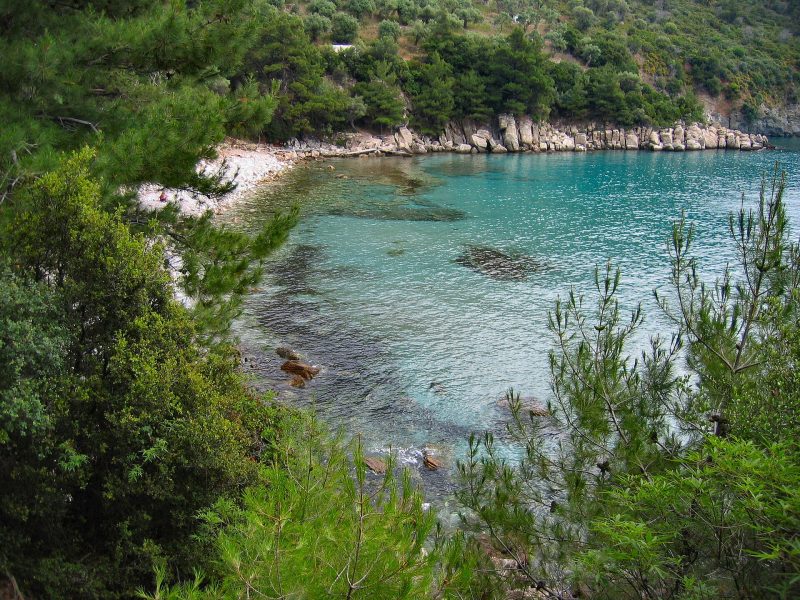
The Nude Beach Question: Signage, Access and Local Norms
On a small island in the Cyclades a couple walked twenty minutes from the port to a cove…
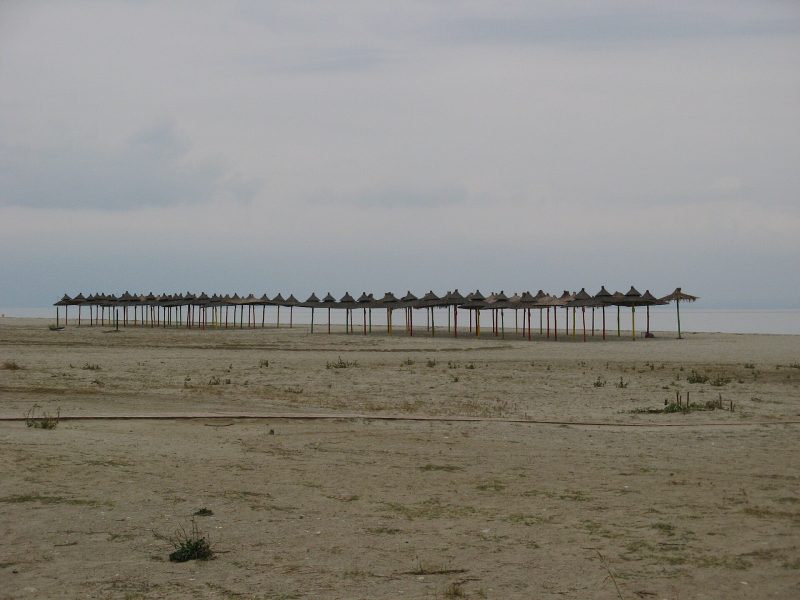
Shade, Wind and the Afternoon Switch on an Island Beach
By half past two the beach had reversed. In the morning everyone had been on the left side,…
Snorkelling From the Shore: Where the Rocks Actually Are
The mask fogged, the water was two metres deep for thirty metres, and there was nothing to see…