Shade, Wind and the Afternoon Switch on an Island Beach
By half past two the beach had reversed. In the morning everyone had been on the left side, where the cliff cast a shadow until noon. At two the shadow was gone, the wind had swung round the headland, and the people who had claimed the left side at nine were moving their towels to the right, where a line of tamarisk trees had begun to give shade. Nobody had planned it and everybody did it, and it happens on every island beach in the Aegean every afternoon.
The afternoon switch is the single most useful thing to understand about a day at a Greek beach, and it is not in any guidebook. It affects where to sit, when to eat, which beach to choose and whether to bother with an umbrella at all.
How shade moves through the day
On a beach with a cliff behind it to the east, the cliff shades the sand until the sun clears the ridge, which in midsummer is around ten. After that the beach is in full sun until the afternoon, when the sun moves west and the shade comes from the other side. A beach with trees behind it has broken shade all day and deep shade in the late afternoon.
The practical consequence is that the same spot is comfortable at nine and unbearable at one. This is obvious in principle and most people still arrive at ten, put a towel down in the first place that looks good, and stay there out of stubbornness while the shade moves twenty metres away.
The trees are the real infrastructure
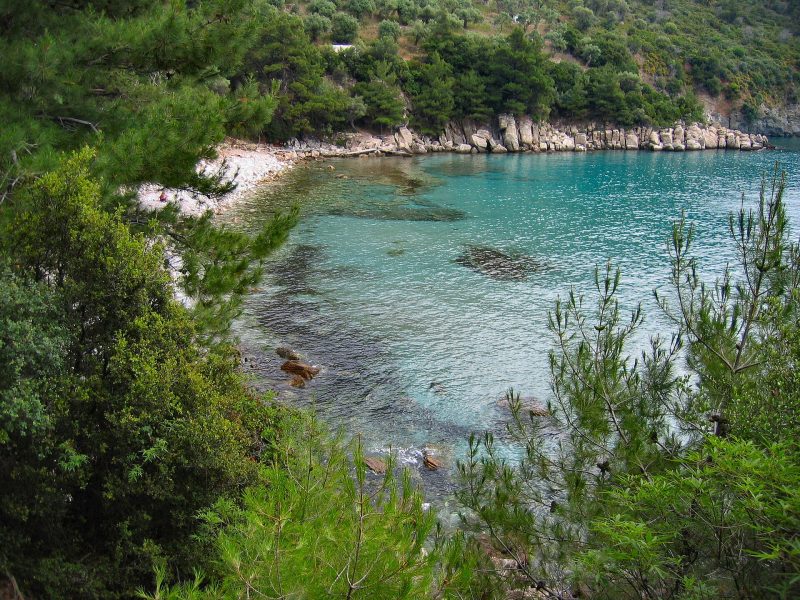
A tamarisk or a cluster of reeds at the back of a beach is worth more than any sunbed, because it gives shade that moves with the sun rather than staying in one place. On islands where the beaches have been left alone, the trees are the reason a beach is usable at three in the afternoon.
Arrive early and take the shade at the back rather than the sun at the front. The view is slightly worse and the day is entirely better, and the people who understand this are the ones who are still on the beach at five while everyone else has gone home burnt.
The wind, and which direction matters
The meltemi blows from the north for days at a time in July and August, and a north-facing beach is unbearable in it while a south-facing cove is calm. This is the second reason to check orientation before choosing a beach, and it is more important than shade on a windy day.
Sand in the wind is the specific misery. A beach with fine sand and no shelter is unusable in a force five, and a pebble beach two coves away is perfectly comfortable. The local rule is that when the wind is up, you go to the other coast and take the pebbles.
The afternoon switch in practice
The switch happens between two and three. The wind changes direction round the headland, the shade arrives from the opposite side, and the tavernas start serving the late lunch. A beach that was crowded and still at one is half empty and pleasant at four, and the water is at its warmest.
The people who stay through the switch get the best two hours of the day. The people who leave at two because it became uncomfortable have left just before it became good, and they will do the same thing tomorrow.
What to bring for shade
An umbrella that can be screwed into sand and angled, or a lightweight tarp and two lines if there are rocks. A beach with pebbles will not hold an umbrella and a beach with trees will not need one. Ask at the room whether the beach has shade before deciding what to carry.
Sunbeds with umbrellas cost eight to fifteen euros for two in season and are worth it on a beach with no natural shade. They are a waste on a beach with trees, and the people who pay for them on a shaded beach are paying for a place to put a bag.
The lunch hour and the beach that empties
Between one and three the beach empties, because Greeks eat late and visitors eat early, and the two overlap in a way that produces a quiet window. The taverna fills at two and the sand empties, and anyone who eats at one gets a table and returns to a beach with space.
This is the other reason the afternoon works. The combination of lunch, shade and a light wind means the worst two hours of the day are spent at a table rather than on a towel, and the beach is reclaimed at four when it is comfortable again.
Sunburn and the wind illusion
A steady wind makes the sun feel weaker than it is, and the most common sunburn on an island beach happens on a windy day in the water. The reflection off the sea doubles the exposure, and the cooling effect of the wind removes the warning signal that would normally send someone into the shade.
The practical rules are unglamorous and they work: a shirt in the water, cream at eleven and again at two, and a hat that covers the ears. The afternoon switch helps, because moving into the shade at three catches the burn before it becomes the reason for a ruined night.
The beaches that work all day
A beach with trees, a taverna and a west-facing aspect works from nine until sunset. A beach with no shade and an east-facing aspect works from seven until eleven and then again after five. Most beaches fall between those two and require a decision about which half of the day to use them.
The best plan on a small island is usually two beaches a day: one in the morning and one in the late afternoon, with lunch and a sleep in between. It sounds indulgent and it is the standard pattern of the place, and it exists because the middle of the day is not beach weather in the way that visitors imagine.
When the wind stops
There are days in August when the meltemi drops entirely, and those are the hottest and stillest days of the year. The sea is flat and warm, the beach is silent, and the sun is brutal from ten. Those are the days to be in the water rather than on the sand, and to eat a long lunch somewhere with a stone wall.
They are also the days when the mosquitoes come out at dusk and the rooms without air conditioning become unpleasant. A still August night on a small island is a specific experience, and the morning after is the time to swim before seven.
Reading a beach in five minutes
Look at where the locals have put their towels and at what time. Look at whether the trees are to the east or the west of the sand. Look at which way the wind is coming and whether there is a headland to break it. Those three observations take five minutes on arrival and they determine the whole day.
Then look at the sky to the north, because that is where the wind comes from and a line of cloud there means the afternoon will be breezy. None of this is complicated and all of it is local knowledge that a visitor can acquire in one morning by paying attention rather than by following a guidebook.
Why it matters more than the beach itself
Two people can spend the same day on the same beach and have completely different experiences, and the difference is entirely timing and position. The beach does not change. The shade moves, the wind shifts, the boats arrive and leave, and the person who understands that sequence has a better day than the person who does not.
That is the argument for spending a week on one island rather than three days on three. By the third day the sequence is known, and the fourth day is planned without thinking. The beach stops being a location and becomes a place with hours, which is what it always was.
Photograph: Wikimedia Commons (CC BY-SA 2.0) · source file

Confessor Santos
Writes about island guesthouses, ferry timetables and the week a room price finally drops.
Keep reading
Nearby landings
The Nude Beach Question: Signage, Access and Local Norms
On a small island in the Cyclades a couple walked twenty minutes from the port to a cove…

Snorkelling From the Shore: Where the Rocks Actually Are
The mask fogged, the water was two metres deep for thirty metres, and there was nothing to see…
Arriving at a Popular Cove Before Ten: Timing on Three Islands
At half past nine in the morning there were eleven people on a beach that would hold four…